


AI Products
AI Products
Design, build, and launch artificial intelligence products with ‹business criteria›.
What is AI PRODUCTS?
The program that trains the profile that
‹AI has just made possible›
Foundational models have changed the rules of the game.
For twenty years, building a technology product was a conversation that began with engineering. Foundational models have just reversed that sequence: for the first time, a person with business judgement can take an AI idea from sketch to functional product without going through an intermediary technical team.
Build, not just coordinate
There are short programs that train AI Product Managers who manage others. AI Products goes one step further: it trains those who decide what to build and also build it, supported by AI-assisted coding and automation tools.
The product comes first
The AI Products student's primary focus is always the business decision: which problem is worth solving, for which user, with what impact, at what cost, and with what risks. Product first, technology second.
Technology is an opportunity, not a barrier.
Students join the program without knowing how to code, and they do not leave as traditional programmers. They graduate knowing how to lead AI-assisted software development, a new capability and a genuine professional advantage. They can engage with technical teams as peers.
You decide where and when.
Upcoming ‹AI Products› editions
Who is AI Products designed for?
The program for those who want to ‹build AI products›
AI Products is designed for professionals in business, product, innovation, consulting, or entrepreneurship who want to lead AI products with their own execution capabilities.
The learning experience
The method is the ‹craft›.
Masterclasses and live hands-on sessions
10 subjects organized into 5 modules to develop judgement, tools, and building capabilities.
Business Cases
6 individual case studies developed specifically for the program, with qualitative and quantitative feedback.
Capstone Project
Teamwork on an open project: an AI product that each team takes from idea to functional prototype based on a set of requirements, with presentations and defenses throughout the program.
Skills
What will you know how to do when you get out?
This program does not start with a syllabus, but with the capabilities we want you to have by the time you finish. We first define what you should be able to do, and from there we design the subjects, the structure, and the assessment. These are the competencies, grouped into the four phases of a graduate's work.
- Identify where AI delivers real value —and where it does not— and assess whether a product is viable before building anything.
- Recognize what type of AI product solves each problem and size its scope.
- Design the user experience of an AI product.
- Define its functional architecture and the division of work between human and machine.
- Build the first functional version of an AI product with the support of assisted coding.
- Connect it with existing systems and design how it fits into real processes and organizations.
- Systematically evaluate how the system performs in real-world use.
- Anticipate and manage its risks while ensuring compliance with applicable regulations.
- Plan the launch, measure its business impact, and decide when to scale, pivot, or retire the product.
The AI Products program
A ‹roadmap› to design, build, and launch AI products
The plan is organized into five blocks that cover the graduate’s work cycle: understanding the landscape, deciding what to build, building it, evaluating it, and taking it to market. Ten subjects.
- AI fundamentals and foundational models How a foundational model learns. Model families (LLMs, multimodal models, embeddings), selection criteria, market dynamics, and obsolescence rate.
- AI product typologies and patterns Recognize the families of AI products. Position a product according to its autonomy and scale.
- Opportunity identification and feasibility assessment How to identify where AI delivers real value and where a simpler solution is preferable. Integrated evaluation—technical, data, business, ethics, and regulation—and portfolio prioritization based on sound judgement.
- User experience and functional architecture design How to design the experience of a probabilistic product (explainability, control, failure, feedback loops) and define the functional architecture that supports it. Two disciplines that, in practice, are part of the same design process.
- Build I: prompting and RAG The first immersion in real building. Rigorous prompting, integration with foundational model APIs through assisted coding, and complete RAG systems built on proprietary knowledge bases. By the end of the subject, you will have built your first functional product.
- Build II: agents and orchestration Designing agents with scoped tools, orchestrating multi-step flows, and managing memory and state. When to use an agent and when to prefer a deterministic flow.
- Integration into existing processes and systems Connection with CRM, ERP, email, and document systems in a practice environment; combination of deterministic and probabilistic logic; design of the human-machine division of work and organizational change.
- 08. Evaluation, Quality, and Operations
Design of task-specific evaluations, LLM-as-a-judge, human evaluation, observability, production degradation detection, and cost control.
- Risk, Ethics, and Regulation Regulation applied to specific products, inbound and outbound intellectual property, AI-specific security, and responsible-by-design development.
- Product Launch, Measurement, and Governance Go-to-market for AI products, product and business metrics, unit economics with variable inference costs, and decisions on when to scale, pivot, or retire a product.
Faculty
Learn from those who ‹build› artificial intelligence products
The AI Products faculty is made up of active professionals specializing in product, innovation, and applied artificial intelligence. Experts who bring real-world experience and the challenges shaping the future of AI-powered products into the classroom.
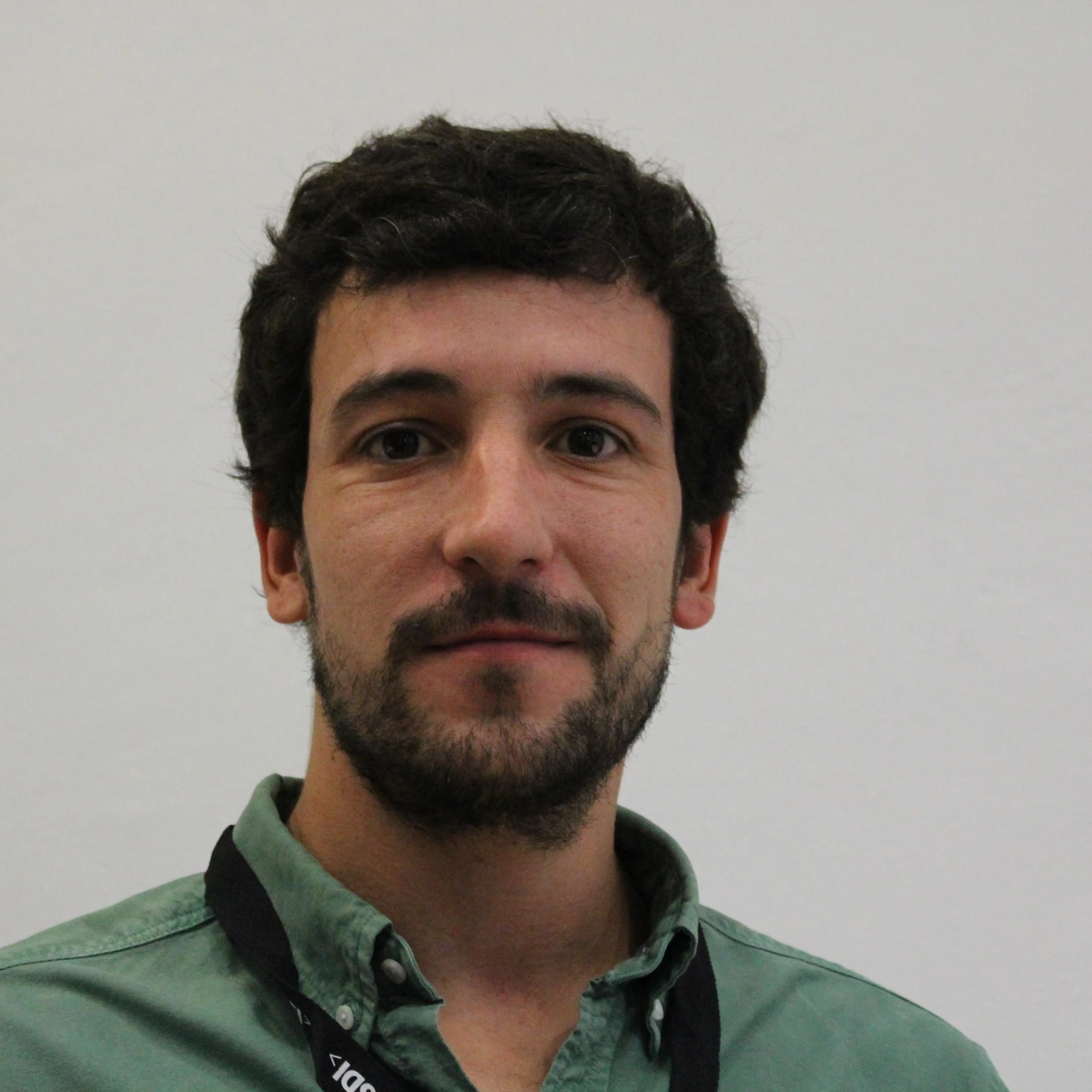
Miguel Taboada
AI Products Programme Director


Óscar Coca
Digital Solution Architect


Alba Bajo
Lead Business Architect


Christina Stathopoulos
Data Expert - Analytical Consultant


Jairo Arias
Customer Engineer

Jorge Gómez
AI & Data Client Delivery Lead

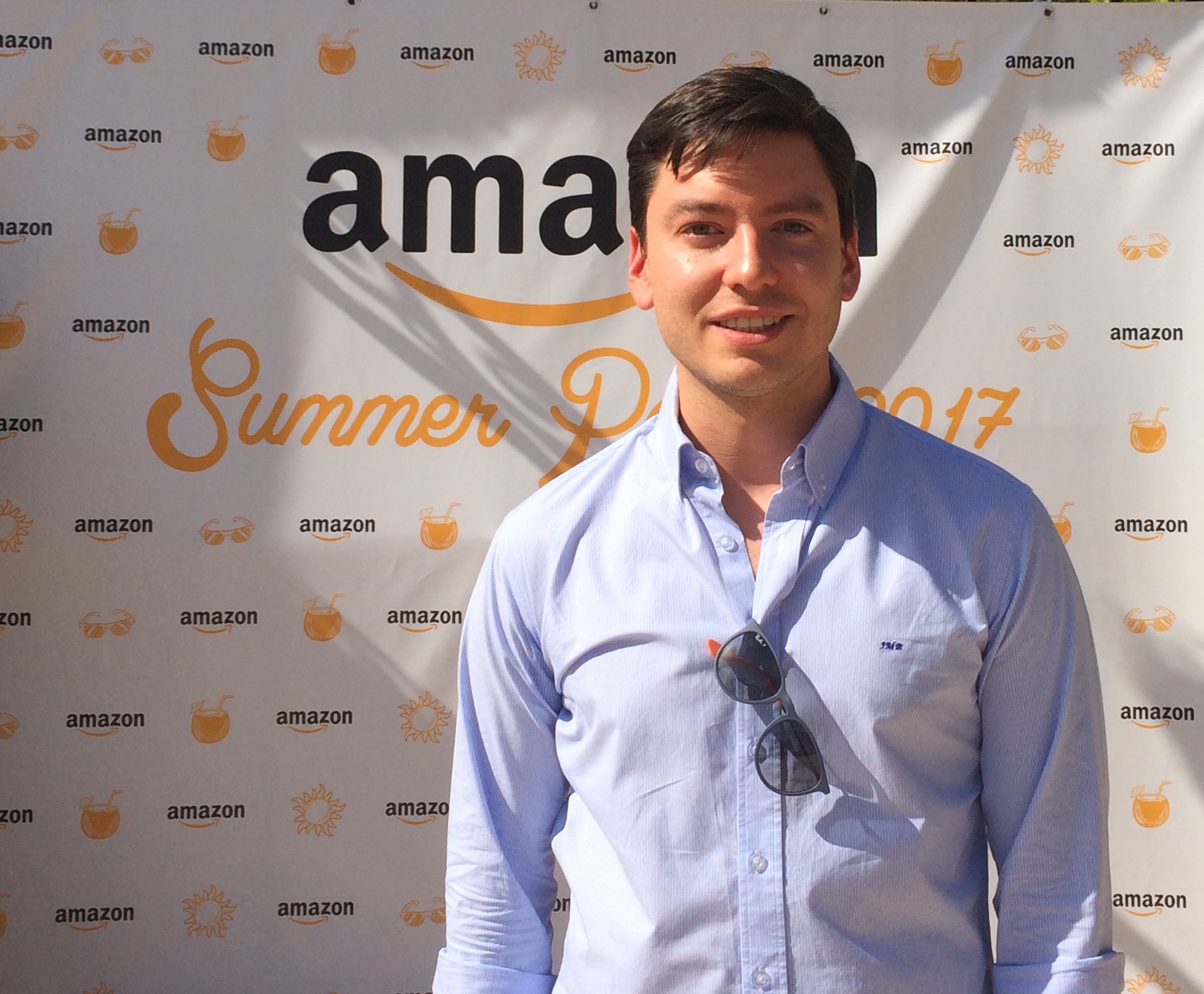
Juan Martín Bellido
Sr. Analytics Consultant & Media Manager


Silvia Ariza
Founder & CEO Eina Data

What will you build?
Build prototypes of real AI products.
An AI product is not a tool you configure: it is a system that must be thought through, designed, built, and integrated to solve a specific problem. Here, you do not configure suites or create basic products: you build real prototypes across different sectors, chosen for their impact, up to a first functional version that demonstrates value with users.
- A generator that writes property listings for a portal based on photos and data.
A copilot that answers questions about a department’s regulations and contracts, always providing the source.
A reader for invoices and delivery notes that extracts the data and prepares it for the system.
- An analytics tool that processes the month’s customer reviews and delivers a report with key patterns to the operations team.
An agent that manages a return from start to finish and escalates exceptions to a human.
An agent that, based on a set of criteria, prepares and schedules meetings for a sales representative.
A search tool for the knowledge accumulated in a consultancy’s past projects, citing the source.
The tool stack
Throughout the program, you will use current market-leading tools to develop technology solutions. The goal is to build sound judgement so that your learning endures.

AI assistant for creating content, analyzing information, coding, and automating tasks.

AI platform for rapidly building web applications using natural language instructions.
Python framework for developing interactive data and artificial intelligence web applications.
Platform for hosting, managing, and collaborating on software development projects.

Automation tool that connects applications and creates no-code workflows.
Open-source automation platform for integrating applications, APIs, and artificial intelligence.

Protocol that enables AI models to connect with tools, applications, and databases.

Collaborative workspace that fosters productivity, innovation, and teamwork.
Awards and Seminars
In other words, the training experts recommend.
QS Star
ISDI has been awarded the highest QS Stars rating in Teaching, Employability, and Online Learning.

RCC-Harvard
ISDI and the Real Colegio Complutense offer an optional seminar at Harvard on digital transformation.
TIME / Statista
ISDI is recognized as one of the world's leading EdTech companies in 2025.

El Mundo
ISDI ranks #1 in Digital Transformation Master's programs in Spain, reinforcing its leadership in digital education.

AI PRODUCTS career opportunities
The profile that ‹the market is starting to demand›
Designs, builds, and launches AI products end-to-end, and takes responsibility for what is delivered. It is the core profile of the program.
Leads AI adoption: from diagnosis to launch, with measurable impact on specific processes.
Identifies AI-automatable processes and builds solutions integrated into the systems the company already uses.
Helps companies implement their AI products and initiatives through project-based engagements.
Bridges the gap between exploration and operations: prototypes, validates, and prepares solutions for scaling.
Launches their own business with an AI product at its core.
Our partners
Our students ‹advance› their careers at leading companies.






Admission
Access the programme that will change your future.
Preguntas frecuentes
FAQs de ‹AI Products›
Why five months and not six weeks?
Building artificial intelligence products with sound judgement requires time, practice, and guidance. AI Products is designed so that students not only understand generative AI, but are also able to identify opportunities, design solutions, build functional prototypes, and launch them in real business contexts.
While many intensive courses focus on specific tools, AI Products develops lasting capabilities and combines learning, business cases, and a capstone project over five months. The goal is not to learn how to use a specific technology, but to acquire a new craft: building AI products.
How is it different from an AI bootcamp?
Bootcamps are usually shorter and focused on introducing specific tools or concepts. AI Products is designed for professionals who want to go one step further and develop a complete understanding of the lifecycle of an artificial intelligence product.
The program combines business, product, user experience, building, evaluation, integration, and launch, allowing students to understand not only how the technology works, but also what is worth building and how to generate real impact within an organization.
How is it different from a technical Master’s in generative AI?
Technical artificial intelligence programs usually start from an engineering perspective and require advanced programming knowledge. AI Products is built from a product and business perspective.
The goal is not to train machine learning engineers, but professionals capable of designing, building, and launching products based on foundational models using AI tools, assisted coding, and no-code solutions. They are different profiles, technology stacks, and career paths.
Do I need to learn how to code?
No prior programming knowledge is required to join the program.
AI Products is designed for professionals in business, innovation, and product who want to develop execution capabilities without following the traditional software development path. Students learn to build using artificial intelligence tools, assisted coding, and automation platforms, acquiring the technical skills needed to create functional products and collaborate with specialized teams.
How is it different from the MDA?
The MDA (Master’s in Data Analytics and Artificial Intelligence) is aimed at profiles with a more analytical focus and a data engineering background. Its focus is on data, models, and the technical capabilities inherent to the field of data science.
AI Products, on the other hand, focuses on creating artificial intelligence products from a business and digital product perspective. It works with foundational models, automation, and the development of applied solutions, preparing professionals capable of turning opportunities into products with real impact.
What type of products will I be able to build?
During the program, you will learn to design and develop artificial intelligence products applied to real business challenges.
These include specialized assistants, automation systems, document extraction solutions, RAG-based products, AI agents, sales proposal generators, analytics tools, and intelligent integrations with CRM and other business systems.
The goal is for you to be able to take an idea from identifying an opportunity through to building a minimum viable product and its subsequent launch.
Do I need previous experience in AI?
No. AI Products starts from the basics on the technical side and does not require previous experience in artificial intelligence or advanced programming knowledge.
The program is designed for professionals in digital, product, innovation, consulting, or entrepreneurship who want to develop new capabilities around applied artificial intelligence. The most important thing is not prior technical knowledge, but curiosity, a builder mindset, and the willingness to experiment with new tools.
ARE YOU CONVINCED? ‹JOIN US›
Suggestions, questions, or complaints
Do you have any ‹suggestion›?
Would you like to share something about your experience with ISDI’s programs? Feel free to do so by sending us an email to the inbox:
[studentsupport@isdi.education](mailto:studentsupport@isdi.education)
To help us process your email, please use the subject line "suggestions, complaints, or claims". Your message will be sent directly to ISDI’s Academic Management team.